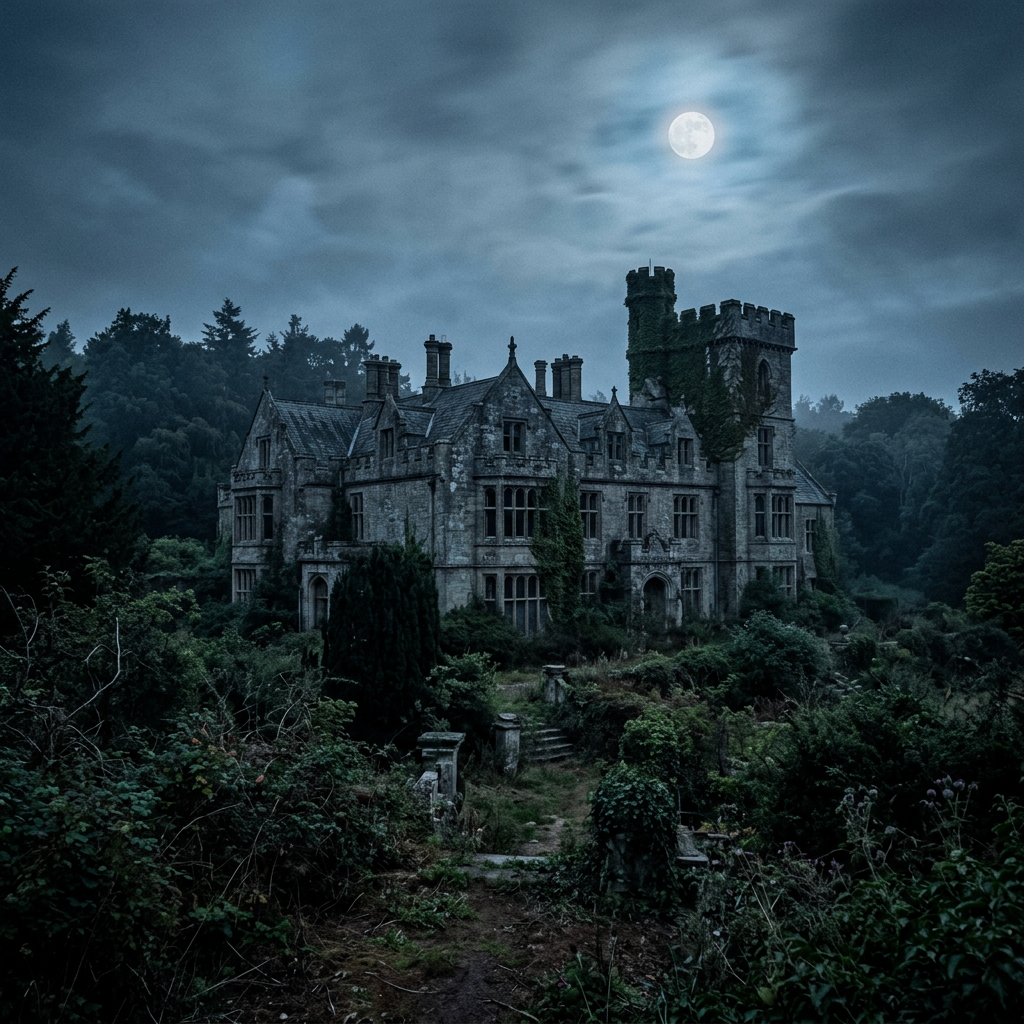
Daphne du Maurier’s Rebecca, first published in 1938, is a haunting Gothic novel about love, jealousy, identity, and the dangerous power of the past. The story follows a shy young woman who meets Maxim de Winter, a wealthy widower, while working as a companion in Monte Carlo. Following a brief courtship, they marry and return to Manderley, Maxim’s magnificent country estate. Instead of enjoying her new life, however, the second Mrs. de Winter finds herself living in the shadow of Rebecca, Maxim’s beautiful and sophisticated first wife.
Although Rebecca died before the novel begins, her presence can be felt throughout Manderley. Her belongings remain in the house, the servants remember her habits, and everyone appears to admire the confidence and elegance she possessed. The unnamed narrator constantly compares herself with Rebecca and becomes convinced that she can never be a suitable wife or mistress of the estate. Her insecurity is made worse by Mrs. Danvers, the cold and intimidating housekeeper who remains fiercely devoted to Rebecca’s memory.
Manderley is much more than the setting of the novel. Its grand rooms, dark corridors, gardens, and proximity to the sea create an atmosphere that is both beautiful and threatening. The estate seems to preserve the past, making it almost impossible for the narrator to establish an identity of her own. Du Maurier’s vivid descriptions make Manderley feel like a character, one that attracts, overwhelms, and eventually traps those who live within it.
At first, Rebecca appears to be a Gothic romance about a young woman who marries a mysterious older man. As the story develops, it becomes a powerful psychological study of insecurity, manipulation, and deception. The narrator imagines Rebecca as perfect because she knows her only through the memories and opinions of others. This idealized image gradually takes control of her thoughts and prevents her from seeing the truth clearly.
The novel remains relevant because many readers understand the pain of comparing themselves with someone who seems more attractive, successful, or confident. Rebecca demonstrates how easily admiration can become obsession and how appearances can hide disturbing truths. It also asks whether we can ever completely know the people we love, especially when silence and fear shape our understanding of them.
Du Maurier creates suspense gradually through atmosphere, suggestion, and the narrator’s troubled imagination. The novel does not depend on constant action to hold the reader’s attention. Instead, tension develops quietly until buried secrets begin to emerge and everything the narrator believes about Rebecca, Maxim, and Manderley is called into question.
Rebecca is an unforgettable novel for readers who enjoy Gothic fiction, psychological suspense, complicated relationships, and mysterious old houses. Its elegant writing and unsettling atmosphere have allowed it to remain compelling for generations. More than eighty years after its publication, the novel continues to invite readers into Manderley, and makes it nearly impossible to forget what they discover there.



Leave a Reply